What Can We Teach Our Kids in a World of AI?
Apr 15, 2026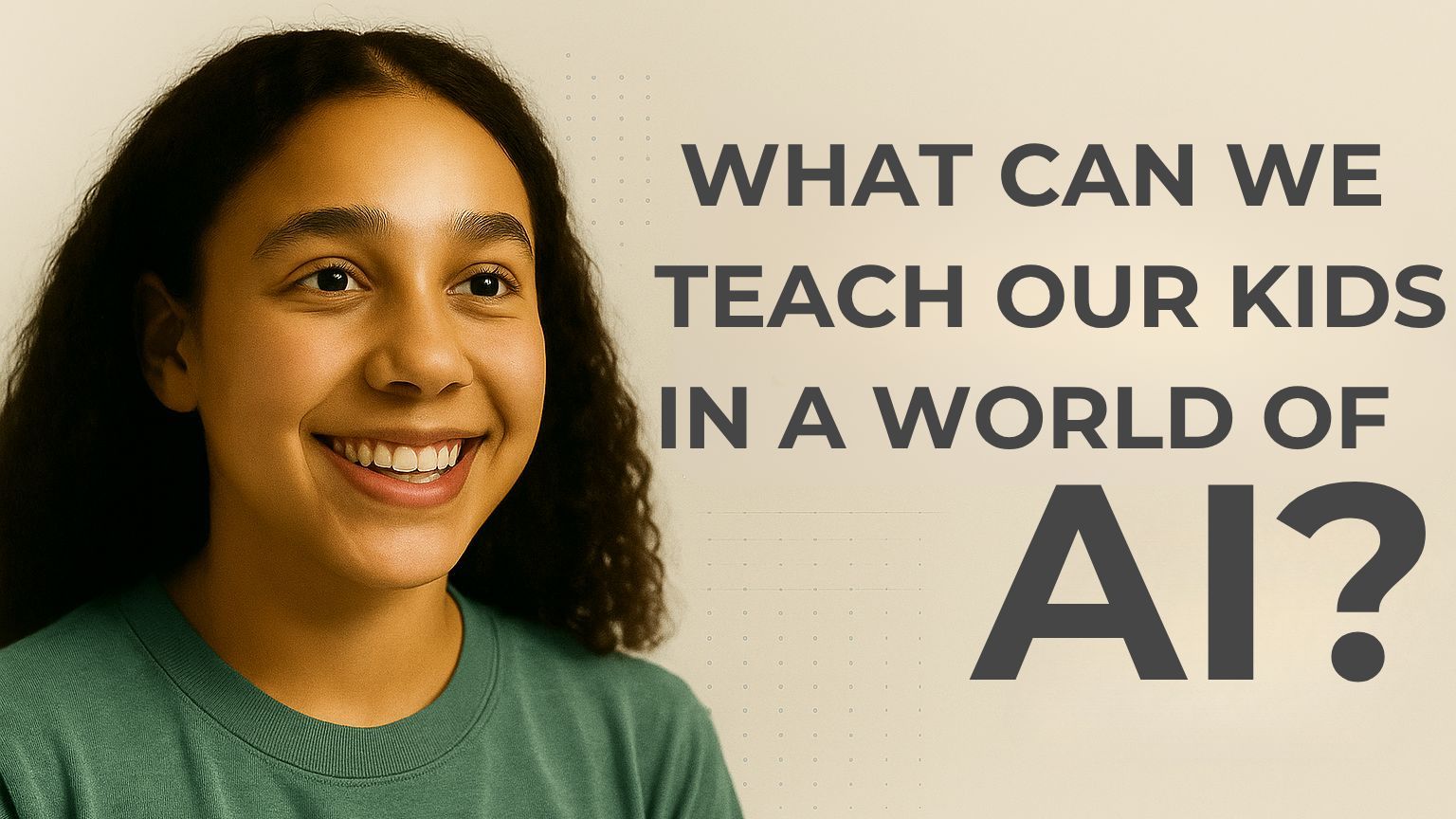
My daughter recently completed graduate school at Ivy League university. She’s smart, thoughtful, and accomplished. The kind of person who checked every box that school asked of her. But a while back, as she reflected on her education journey in high school, she said something that made me pause and think:
“I was always great at taking tests, but looking back, I’m not sure how much I truly learned.”
That hit me. She wasn’t being dramatic, just honest. Like many high achievers, she learned how to optimize for the system. Get the grade. Score well. Move on.
Many parents, including me, find ourselves balancing two conflicting realities: fostering curiosity and independent thinking, but also feeling pressure from standardized tests, GPAs, and college admissions. These pressures often crowd out deeper, more meaningful skills. AI challenges us to rethink this tension. Perhaps it’s an opportunity to realign what we value in education, not ignoring practical outcomes, but ensuring our kids gain meaningful skills along the way.
As a father and as someone who has spent over 3,000 hours and 10,000 prompts working hands-on with AI I’ve been thinking about what education is really preparing kids for. Because now that AI can do so much of what school rewards writing essays, solving math problems, acing standardized tests it’s time to ask:
"How to prepare kids for a future shared with AI"
THE SYSTEM WAS BUILT FOR A DIFFERENT ERA
A lot of parents are quietly worried.
- Will AI make education meaningless?
- Will kids rely on machines and stop thinking for themselves?
- Will learning still matter?
I get it. But what if AI doesn’t end learning but frees it? The old system trained kids to memorize, recall, and perform. And it worked, for that world. But AI now handles much of that with ease. What’s left is the part we’ve often overlooked: Making meaning. Asking better questions. Understanding what to do with knowledge once you have it.
AI doesn’t kill learning. It just exposes how narrow our definition of learning has been.
And that’s our opportunity: to build something deeper.
THE SHIFT: FROM MEMORIZATION TO MEANING
If we do this right, we can raise a generation of learners who:
- Don’t just recall answers, but use them with insight
- Don’t just follow instructions, but write better ones
- Don’t just ask for the solution, but understand the problem
We can raise kids who don’t compete with AI but collaborate with it. Who know how to think with machines, without outsourcing their judgment.
AREAS TO EMPHASIZE IN A WORLD SHAPED BY AI.
The shift toward meaningful learning isn’t simple, but perhaps we can gently emphasize areas that might serve our kids well, exploring possibilities rather than prescribing outcomes. Here are some ideas:
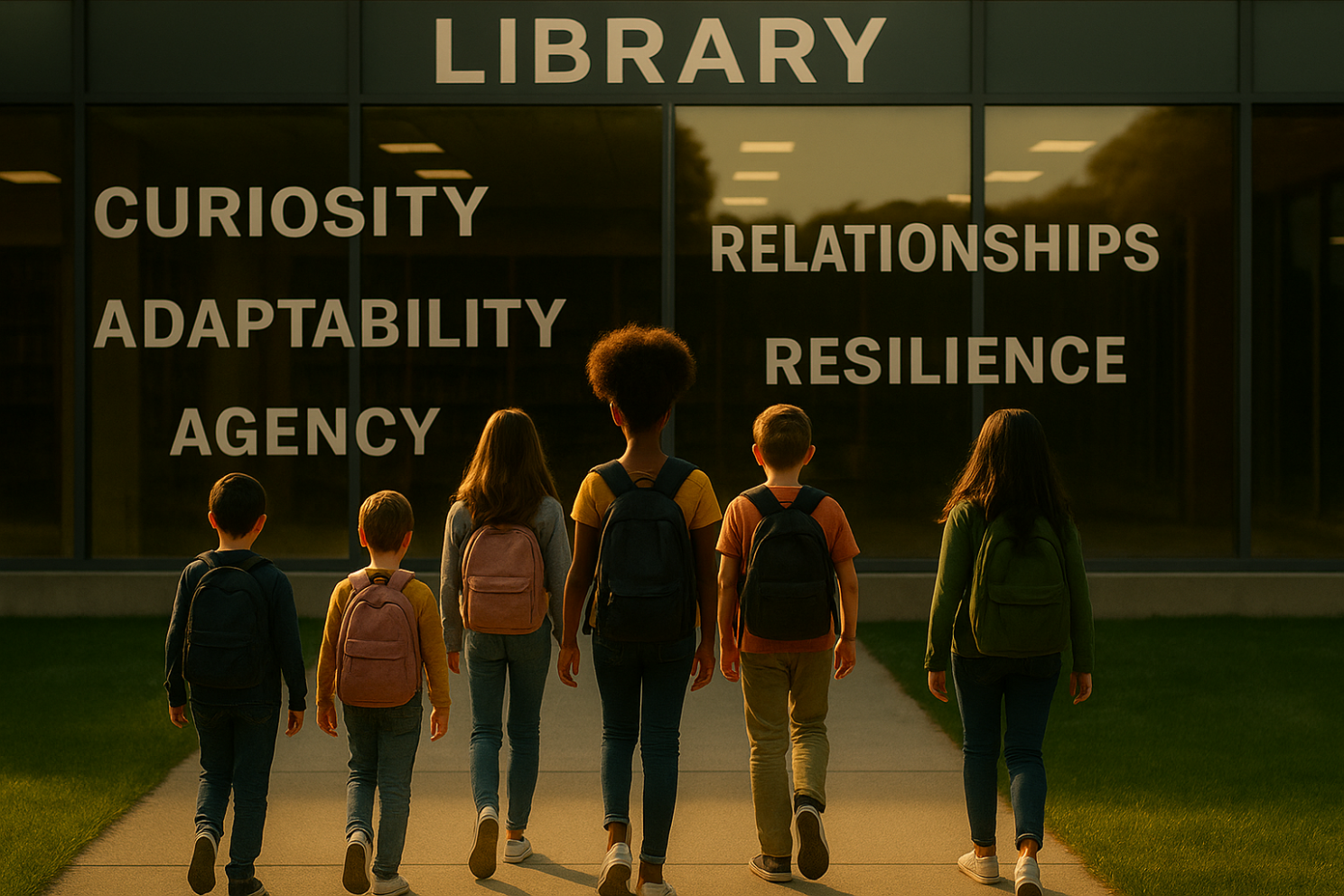
CURIOSITY: How might we nurture a deeper drive to ask questions and explore freely?
- Encouraging open-ended exploration.
- Learning alongside our kids when we don't have answers ourselves.
- Wondering together, rather than just providing solutions.
RESILENCE: What if we treated setbacks and challenges as natural parts of learning?
- Allowing kids space to navigate challenges independently.
- Sharing and normalizing experiences of growth through difficulty.
- Reinforcing that resilience grows with every new experience.
ADAPTABILTY: Could we foster comfort with change and the unfamiliar?
- Celebrating the courage to explore new tools and ideas.
- Highlighting the process of learning itself, rather than just results.
- Reinforcing flexibility as an essential skill in a changing world.
AGENCY: How do we help kids see themselves as active shapers of their own futures?
- Inviting them to make meaningful decisions.
- Reflecting together about choices and their impacts.
- Encouraging thoughtful independence.
RELATIONSHIP BUILDING: In an increasingly digital world, how might we highlight genuine human connection?
- Providing opportunities to collaborate and communicate in meaningful ways.
- Modeling empathy, listening, and respectful dialogue.
- Guiding them gently through the complexities of human interactions.
In exploring these areas, perhaps we find pathways not just to good education, but to richer, more thoughtful lives.
RAISING THINKERS, NOT JUST USERS
We don't need to reinvent education entirely. Schools like High Tech High, Khan Lab School, and several Finnish institutions already prioritize critical thinking, curiosity, and resilience, demonstrating that deeper learning is achievable.
We need classrooms and conversations that:
- Prioritize insight over output
- Reward exploration
- Prepare kids not for our past, but their future
The future belongs to those who:
- Ask better questions
- Guide machines effectively
- Think independently amidst intelligent tools
FINAL THOUGHT
As a dad, and someone who helps professionals understand and apply AI in their work. I’ve learned something simple:
AI is only as helpful as the person guiding it. That’s true for adults. And it’ll be even more true for our kids. We don’t need to turn them into prompt engineers overnight. But we can start by helping them ask better questions. Reflect on what matters. Try things. Make choices. Use the tools, without losing themselves in them.
And if we do that consistently, not perfectly, but consistently, then maybe we don’t just raise good students. Maybe we raise thoughtful, capable people, ready to lead in a world where intelligence is everywhere, but wisdom still counts.